
Austin’s Real Estate Market: Trends and Insights
Key Takeaways
- Austin’s housing market is stabilizing after previous volatility.
- Median home prices have risen slightly, to $450,000 in December 2024, up 1.4% from the previous month.
- Active listings and housing inventory are on the rise, indicating a more balanced market.
- Suburban areas are experiencing significant growth due to affordability and lifestyle preferences.
Table of Contents
- Market Overview
- Median Home Prices
- Housing Inventory
- Suburban Growth
- Impact of Mortgage Rates
- Rental Market Trends
- Future Outlook
Market Overview
In 2024, Austin’s real estate market has shown signs of stabilization after a period of rapid growth and subsequent cooling. The market’s volatility appears to be calming, with indicators pointing towards a more balanced environment for buyers and sellers.
For those navigating this evolving landscape, partnering with experienced professionals can provide invaluable insights. One such firm is Austin TX real estate agents DEN Property Group. As a boutique, independent real estate consultancy, DEN Property Group specializes in assisting discerning buyers, sellers, investors, and developers in achieving their real estate goals through collaboration, creativity, and a dedication to service. Their deep understanding of Austin’s neighborhoods and commitment to client satisfaction make them a trusted resource in the local market.
Median Home Prices
As of December 2024, the median home price in the Austin-Round Rock Metropolitan Statistical Area (MSA) increased by 1.4% year-over-year, reaching $450,000. This modest rise suggests a move towards price stabilization, offering potential buyers a more predictable market.
While Austin experienced double-digit home price growth in previous years, the current slower rate of appreciation is seen as a healthy correction, aligning prices more closely with local income levels and underlying demand. For both first-time buyers and investors, this environment may offer more manageable entry points compared to the highly competitive market seen during the pandemic boom. Experts also note that specific neighborhoods within and around Austin are experiencing unique price trends: high-demand areas still command premium prices, while others, especially on the market’s periphery, may offer relatively better value.
The luxury home segment remains resilient, with waterfront and downtown properties attracting high-net-worth buyers, even as affordability concerns rise for the median segment. As always, micro-market trends can differ significantly, making it increasingly important for buyers and sellers to work with advisors who understand neighborhood-specific dynamics.
Housing Inventory
The housing inventory in Austin has increased significantly, reaching a seven-year high in May 2024. This surge provides buyers with more options and reduces the competitive pressure that characterized previous years.
Several factors are contributing to the expanded inventory, including a robust pipeline of new construction, more homeowners willing to list their homes after waiting through the uncertainty of previous years, and changes in investor activity as rental yields moderate. As a result, buyers now have greater negotiation power. Homes are also spending longer on the market, with the average days on market rising compared to the frenzied pace of early 2022. Sellers, on the other hand, are responding by making more concessions, such as covering closing costs or offering home warranties, to entice buyers.
Another notable trend is the diversification of available housing types, from townhomes and condos closer to downtown to single-family homes and even build-to-rent subdivisions in the suburbs, catering to a wider range of budgets and lifestyle preferences.
Suburban Growth
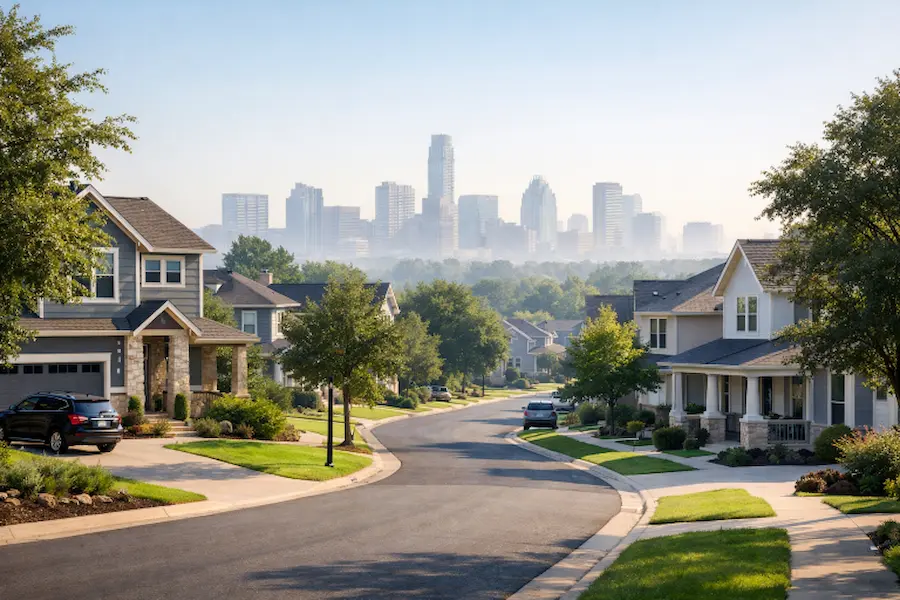
The “donut effect” has become evident in Austin, with population and job growth shifting from the urban core to suburban areas. Cities along the I-35 corridor, such as Kyle and Buda, are experiencing rapid expansion due to their relative affordability and appealing lifestyle options.
Several factors, including new employment centers, improved infrastructure, and major brand relocations, underpin this suburban surge. Master-planned communities in Round Rock, Cedar Park, Georgetown, and Leander are attracting families and professionals seeking larger homes, modern amenities, and good schools, all at a price point lower than Austin proper. Mixed-use developments, offering walkable retail and office spaces, add to these suburban markets’ appeal, drawing not only local movers but also out-of-state buyers attracted by the greater value.
Commercial growth in these areas is also keeping pace with residential expansion. New restaurant districts, medical facilities, and coworking spaces are redefining what it means to live and work in Austin’s suburbs, lessening the need for daily commutes into the city center.
Impact of Mortgage Rates
High mortgage rates have influenced buyer behavior, leading to a slowdown in home sales. While rates are expected to dip slightly, they are not expected to decline enough to boost demand significantly in the near term.
Rates hovering near multi-year highs have changed affordability calculations for many would-be buyers, especially first-timers. Some buyers are delaying purchases in hopes of improved rates, while others are moving forward with creative financing strategies, such as adjustable-rate mortgages or increased down payments to lower monthly costs. Lenders are responding by rolling out new programs, including temporary rate buydowns and special incentives for qualified borrowers.
Sellers, cognizant of buyers’ rate sensitivity, may be more flexible in negotiations or even consider assumable mortgages where applicable. The rate environment is also encouraging more renters to stay put, limiting the potential expansion of the buyer pool despite growing inventory. As monetary policy evolves, market participants will be watching closely for any signals that could signal larger rate cuts or shifts in credit availability.
Rental Market Trends
The rental market in Austin has also been affected, with a notable decrease in median asking rents. In March 2025, the median asking rent fell 10.7% year over year to $1,420, reflecting broader housing market trends.
This cooling in the rental sector can be attributed to a surge in multifamily development, which has delivered thousands of new units to the market, increasing supply and giving renters more options than at any point in the past several years. Landlords are increasingly offering concessions such as a month of free rent, reduced deposits, and upgraded amenities to attract tenants, particularly in newly constructed properties competing for occupancy. Despite this, Austin remains one of the most desirable cities for renters, with robust demand from new graduates, tech workers, and remote professionals relocating from other states.
For renters interested in transitioning to homeownership, the softer rental market provides more time and flexibility to assess the for-sale landscape as prices stabilize. Meanwhile, investors are recalibrating their strategies, focusing on moderate rent growth rather than the steep gains of earlier cycles and putting more emphasis on tenant retention and property upgrades to remain competitive.
Future Outlook
Looking ahead, Austin’s real estate market is expected to continue its path towards stability. While affordability and high mortgage rates remain challenges, the increase in housing inventory and suburban growth offer opportunities for prospective buyers. Engaging with knowledgeable local real estate professionals can provide valuable insights and guidance in navigating this evolving market.
Demographic trends, including continued influxes of new residents, a strong regional economy, and persistent interest from corporate employers, suggest that Austin will remain a vibrant real estate market for the foreseeable future. Ongoing infrastructure improvements, like public transit expansions and highway upgrades, promise to support both existing neighborhoods and emerging suburban hubs, further shaping the market’s trajectory.
Policy developments at the state and municipal levels, focused on expanding housing options and promoting affordability, will also play a key role in shaping market dynamics. Buyers and sellers will need to stay agile, leveraging expert advice and up-to-date data to make informed decisions. The expanded choices and tempered price growth of 2024 represent a unique opportunity for those seeking stable, long-term investments in one of America’s fastest-evolving cities.