
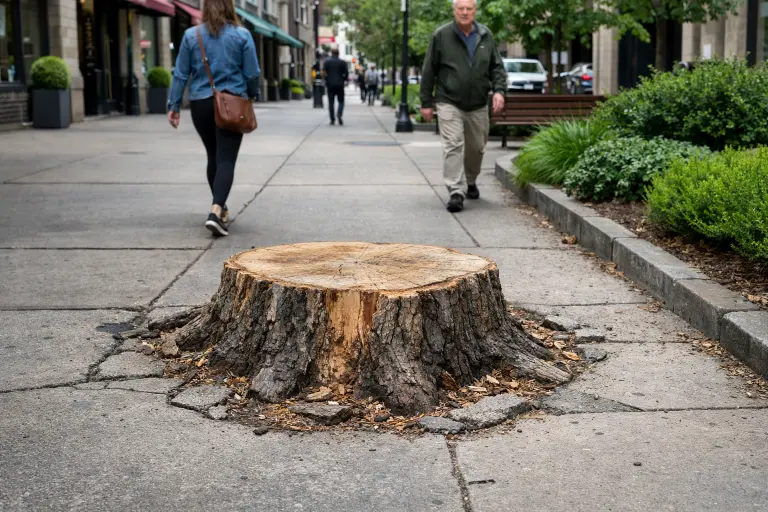
Effective Methods for Urban Tree Stump Removal: Safety and Best Practices
Table of Contents
- Importance of Stump Removal
- Manual Stump Removal
- Stump Grinding
- Chemical Decomposition
- Best Practices for Urban Stump Removal
- Conclusion
Urban environments pose unique challenges when managing tree stumps. Addressing these challenges is essential for keeping public spaces safe, preserving aesthetics, and preventing property issues. Various techniques, such as Stump Grinding, can be employed depending on the situation, but choosing the right approach is critical to minimize disruption in busy landscapes. This article explores various stump-removal methods and outlines practical strategies to ensure safe, efficient operations in urban areas.
Along with choosing the right method, understanding the broader impact on an urban ecosystem can help guide responsible decision-making. The presence of old stumps can affect pedestrian safety, hinder maintenance efforts, and even create entry points for pests that threaten nearby structures. Cities committed to high standards of public care must carefully consider how to remove tree leftovers efficiently and responsibly.
Managing tree stumps is not just about clearing land. Stumps may disrupt the use of sidewalks and parks and can even lead to complications with underground infrastructure. Selecting the right equipment and approach ensures that removal not only restores function but also maintains neighborhood appeal. For more extensive site management, integrating Tree Removal services can address additional obstacles posed by mature trees and roots.
It is important to balance the need for quick results with long-term sustainability. Reviewing multiple options, manual, mechanical, and chemical, helps urban green space managers make choices that support community use and long-term beautification goals. For a deeper understanding of the impact of urban landscaping, the New York Times covers urban forestry and heat management, which further underscores why proper maintenance, including stump removal, is increasingly vital.
Importance of Stump Removal
Tree stumps left in city landscapes are more than just a visual nuisance. They quickly become safety concerns, often hidden by grass or shrubs, and pose trip hazards for pedestrians and barriers to maintenance staff. Such obstacles may increase the risk of injury and lawsuits for property owners and municipal managers.
Beyond safety, dead stumps can draw pests like termites and carpenter ants, which not only threaten the old wood but may also invade homes and nearby commercial buildings. Additionally, neglected stumps degrade curb appeal, affecting property values and the public’s enjoyment of shared spaces.
Reducing these risks through timely stump removal enhances urban aesthetics and supports healthy, vibrant neighborhoods.
Manual Stump Removal
Manual removal is a common choice for smaller tree stumps or sites where mechanical equipment isn’t practical. The process requires significant physical effort but avoids the use of fuel-powered tools, which can benefit the environment. Steps include soaking the soil to make roots easier to cut, exposing and severing major roots with hand tools, and leveraging the stump out using bars or shovels.
While manual methods limit disturbance to nearby plants, they can be slow and are usually reserved for stumps under 12 inches in diameter. Careful planning is necessary to avoid damage to underground utilities or irrigation lines. This labor-intensive approach is rarely used for large urban projects, where time and efficiency are priorities.
Stump Grinding
Stump grinding is often the preferred method in busy urban landscapes. Specialized machines quickly reduce stumps to wood chips below ground level, allowing for rapid replanting or landscaping. This technique disturbs much less soil compared to full excavation and helps maintain the integrity of nearby walkways or green space features.
Safety is essential during grinding operations. Operators must use appropriate protective gear, and equipment must be regularly inspected. Another advantage is that the resulting wood chips can be collected for mulch or compost, contributing to sustainable urban gardening initiatives. According to Better Homes & Gardens, stump grinding is not only efficient but also one of the safest approaches in urban areas where underground utilities may be present.
Chemical Decomposition
Chemical decomposition speeds up the natural breakdown of stumps by applying agents such as potassium nitrate. This process involves drilling holes to allow the chemical to penetrate deep into the wood, followed by covering the stump to trap moisture and boost decay. Chemical methods are much less strenuous than manual extraction, but do require patience as the breakdown can take anywhere from a few weeks to several months.
This technique is most effective for stumps that do not need to be removed urgently and for locations where machinery use is limited. Environmental care is crucial, as improper use can affect soil health and nearby plants.
Best Practices for Urban Stump Removal
Urban stump removal should always begin with a thorough site assessment. Evaluators must examine the stump’s size and decay level, its proximity to buildings, sidewalks, and roads, and the presence of underground infrastructure. Selecting the removal method should reflect these factors, balancing safety and efficiency.
Operators must be trained to handle dangerous equipment or chemicals properly and should wear suitable protective apparel. Procedures should be coordinated to keep public areas open and safe. It’s equally important to maintain soil health to ensure any future landscaping efforts are successful. Preserving the urban ecosystem while enhancing accessibility and appearance represents a long-term investment in community health and happiness.
Conclusion
Safe and responsible stump removal contributes to more attractive, accessible, and pest-free urban environments. By combining manual labor, machinery, and chemical treatments, cities can create spaces that encourage community interaction while minimizing environmental impacts. Careful adherence to best practices ensures that public green spaces remain safe and beautiful for everyone.