
How to Choose a Residential Garage Door That Fits Your Home, Climate, and Daily Routine
Table of Contents
- Why Your Garage Door Choice Matters
- Start With Your Home’s Design
- Match the Door to the Climate
- Compare Common Materials
- Choose Insulation Based on Use
- Measure Space and Clearance
- Review Features and Safety
- Build a Complete Budget
- Repair or Replace?
- Final Decision Checklist
A garage door is both a functional part of the home and a major exterior feature. The best choice depends on more than appearance. It should fit the opening, complement the house, handle local weather, support everyday access, and meet realistic maintenance expectations.
When comparing residential garage doors, begin by identifying how the garage is actually used. A detached space used only for vehicle storage can have different priorities than an attached garage below a bedroom, a workshop with power tools, or a frequently used home gym.
Why Your Garage Door Choice Matters
The door can influence curb appeal, garage comfort, noise, weather protection, and how easily people enter the home each day. A low initial price is only one consideration. Material upkeep, insulation, replacement parts, and repair needs can affect the longer-term cost of ownership.
Routine inspection also matters after installation. Scheduling garage door servicing when movement becomes uneven, noisy, or unreliable can help identify worn components before they interfere with daily use. Learn more about garage door servicing options.
Start With Your Home’s Design
Look at the roofline, siding, trim, front door, exterior lighting, and window shapes before choosing a style. Raised-panel doors suit traditional homes, while flush-panel doors offer a cleaner, contemporary look. Carriage-style doors work well with classic and farmhouse exteriors, and full-view doors fit modern designs. The garage door doesn’t need to copy every exterior color or detail, but should look intentional with the rest of the facade. View finish samples outdoors, as lighting can affect their appearance.
Match the Door to the Climate
Climate should guide both material and hardware decisions. Persistent moisture and strong sunlight can increase the need for wood finishing. In coastal or humid areas, corrosion-resistant components may be especially important. Locations exposed to severe storms may have local requirements for wind-rated doors or reinforced hardware, so check applicable building rules before placing an order.
Compare Common Materials
- Steel: A widely used option with many panel and finish choices. Maintain painted or coated surfaces so that exposed areas remain protected.
- Wood: Offers natural grain and a custom appearance, but commonly requires more regular finishing care than other materials.
- Aluminum: Lightweight and often used for modern designs, though it can dent more easily than heavier materials.
- Fiberglass: Can provide a wood-like appearance and may be useful in damp environments. Construction quality varies by product.
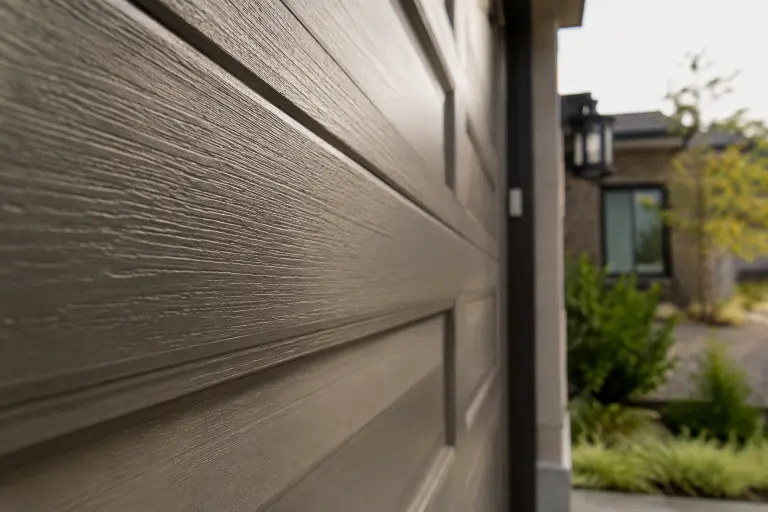
- Composite: Can provide a wood-inspired look while reducing some of the upkeep associated with natural wood.
Choose Insulation Based on Use
Insulation is most relevant when the garage is attached to the house, used for hobbies, located below the living space, or exposed to substantial heat or cold. R-value describes resistance to heat flow, so a higher value generally indicates greater resistance. Still, the door alone does not control comfort. Seals, wall and ceiling insulation, windows, and air leaks matter too.
For attached garages, air sealing between the garage and living areas helps limit pathways for vehicle exhaust to enter the home. A detached storage garage may not need the highest insulation level if temperature control is not a goal.
Measure Space and Clearance
Do not order based only on the stated size of the existing door. Measure the opening width and height, the headroom above the opening, the side room beside the tracks, and the back room to the rear wall. Also note beams, lights, ducts, shelves, storage racks, and the height of vehicles with roof racks or cargo carriers.
Low ceilings, unusual framing, or limited clearance can affect the track system and opener arrangement. A precise measurement before ordering is particularly important when the space has been altered since the previous door was installed.
Review Features and Safety
Windows can bring daylight into the garage but can also affect privacy, heat gain, weight, and cost. Consider placement, privacy glass, and impact-resistant glass where conditions or local requirements call for it. Hardware quality matters as well, including rollers, hinges, tracks, springs, cables, and weather seals.
Choose opener features that support the household’s routine, such as battery backup, motion lighting, remote access, smartphone alerts, or vacation settings. Automatic residential garage door operators are subject to a federal consumer product safety standard. Test photo-eye sensors and reversing functions as directed by the manufacturer, keep remotes out of children’s reach, and leave spring or cable adjustments to trained technicians.
Build a Complete Budget
Compare itemized estimates rather than relying on one total. Include the door sections, finish, insulation, windows, decorative hardware, tracks, springs, cables, opener work, removal of the old door, possible framing repairs, labor, and expected maintenance. Ask whether disposal is included, whether the current opener is compatible, what the warranty covers, and whether replacement panels or parts are available.
Repair or Replace?
When Repair May Be Enough
Worn rollers, hinges, seals, remotes, keypads, sensors, and minor dents may be repairable. Noisy operation can also result from routine wear or a need for appropriate maintenance.
When Replacement May Make More Sense
Replacement may be more practical when a door has severe rust, rot, repeated panel damage, major storm damage, frequent breakdowns, inadequate insulation for an attached garage, or outdated safety equipment.
Final Decision Checklist
- Confirm the opening measurements and available clearance.
- List the garage’s primary uses and comfort needs.
- Consider moisture, sun, wind, and temperature conditions.
- Compare material upkeep, durability, and appearance.
- Review insulation, seals, windows, hardware, and opener compatibility.
- Confirm safety features and compare complete estimates.
- Plan for visual checks and timely maintenance.
The right garage door fits more than the opening. It should work with the home’s design, local conditions, daily routine, safety needs, and budget while remaining practical to maintain over time.