
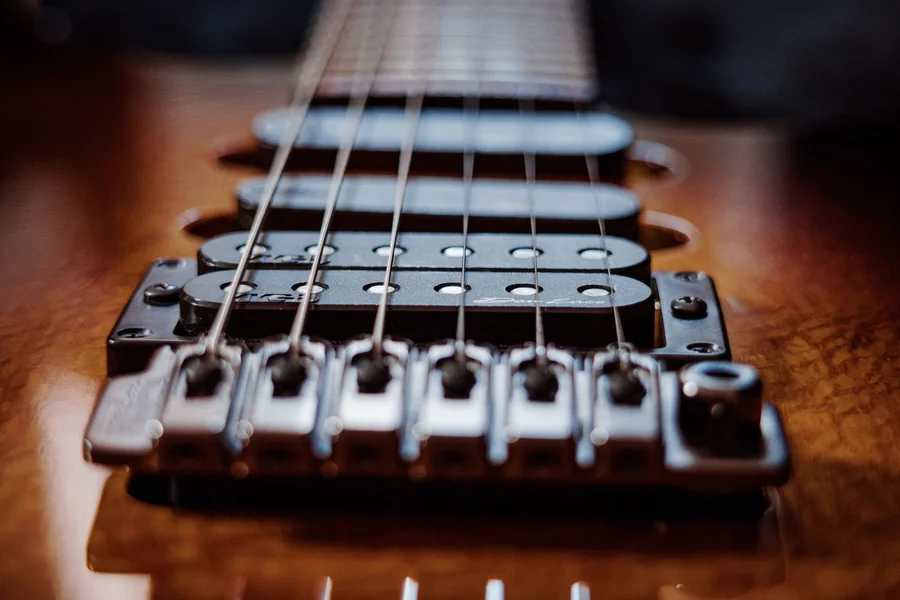
Nine String Guitar: The Ultimate Guide to Extended-Range Mastery
In modern music, guitarists are constantly pushing boundaries in search of lower registers, deeper sonic weight, and uncharted harmonic possibilities. What began decades ago with the seven-string revolution has expanded dramatically, culminating in the rise of the nine string guitar. This extended-range instrument bridges the gap between conventional electric guitars and electric basses, unlocking sub-bass frequencies while preserving high-register lead capabilities across a single continuous fretboard.
Whether you are exploring progressive metal, experimenting with cinematic scoring, or curious about the engineering behind multi-scale instruments, diving into nine-string guitars requires an understanding of physics, hardware, and amplification. In this comprehensive guide, we cover standard tunings, scale length requirements, string gauges, pickup choices, and how to master playing one.
The Evolution of Extended-Range Guitars
For generations, the six-string guitar tuned to standard EADGBE was the unquestioned baseline of contemporary popular music. The 1990s introduced seven-string models into mainstream rock and metal, followed by eight-string guitars popularized by progressive bands like Meshuggah and Animals as Leaders in the late 2000s. The nine-string represents the next logical leap in extended-range engineering.
By adding an extra lower string below the standard 8-string tuning, players can generate crushing rhythm tones that reach deep into bass frequencies without altering their treble lead playing. Exploring the sonic breadth of such instruments demonstrates how modern technology transforms traditional arts, much like studying the importance of music education in schools reveals the deep connection between theory and innovation. To explore modern production catalogs, check out the extended-range lineups at Ibanez Guitars and Schecter Guitar Research.
“A nine-string guitar is not just an instrument with three extra strings; it is a hybrid platform that demands specialized technique, tension management, and EQ balancing.”

Standard Tuning and Register Range
The standard tuning for an extended-range nine-string electric guitar extends standard 8-string tuning down by a fourth:
- Standard 9-String Tuning (Low to High): C#1 – F#1 – B1 – E2 – A2 – D3 – G3 – B3 – E4
- Frequency Range: The lowest note, C#1 (approx. 34.6 Hz), sits lower than the lowest open string on a standard 4-string bass guitar (E1 at 41.2 Hz).
- Drop Tunings: Many metal artists utilize Drop B or Drop A variations (e.g., B0 – F#1 – B1…), enabling powerful one-finger power chords in the sub-bass register.
The Physics of Scale Length: Straight vs. Multiscale (Fanned Fret)
The biggest engineering challenge with nine-string guitars is string tension. If you try to tune a low C#1 on a standard 25.5-inch guitar neck, the string must be exceptionally thick to maintain tension. However, an excessively thick string becomes stiff, sounds muddy (like an inharmonic thud), and refuses to intonate properly.
To solve this, manufacturers use extended and multiscale designs:
1. Extended Straight Scale (28” to 30”)
Traditional straight-scale nine-strings maintain a uniform length (typically 28 to 30 inches) across all strings. While this provides the necessary tension for the low C# and F#, it makes the high E and B strings extremely tight and stiff, making soloing and string bending difficult.
2. Multiscale / Fanned-Fret Design
Modern nine-strings almost exclusively favor multiscale construction. In this layout, the frets fan out across the fingerboard: the bass side has a long scale length (e.g., 30 inches) for tight, articulate low notes, while the treble side has a shorter scale length (e.g., 26.5 to 27 inches) for comfortable lead playing. For beginners building technical familiarity, approaching multiscale geometry is as methodical as following a structured beginners guide to coding and mechanics.
Specifications & Hardware Comparison
| Feature | Standard 6-String | Extended 8-String | Nine-String Guitar |
|---|---|---|---|
| Lowest Standard Note | E2 (82.4 Hz) | F#1 (46.2 Hz) | C#1 (34.6 Hz) |
| Typical Scale Length | 24.75” – 25.5” | 27” – 28” | 28” – 30” (or 27”-30” Multiscale) |
| Lowest String Gauge | .042 – .046 | .074 – .080 | .090 – .105 (up to .114) |
| Pickup Type | Standard Passive/Active | Extended Active/Passive | High-Clarity Custom Voiced (Fishman, EMG, Lundgren) |
Amplification and Tone Sculpting for Sub-Bass Riffs
Plugging a nine-string guitar directly into a standard high-gain tube amplifier often results in overwhelming low-end distortion and flubby, undefined mud. Because the instrument generates fundamental frequencies that overlap with bass guitars and kick drums, sculpturing your EQ is essential:
- High-Pass Filtering (Low Cut): Use an EQ or overdrive pedal (such as a Tubescreamer or precision boost) to cut sub-frequencies below 80–100 Hz before the distortion stage. This tightens up the note attacks.
- High-Headroom Digital Modelers: Digital processors like Neural DSP Quad Cortex, Fractal Axe-FX, and Line 6 Helix excel at processing the massive dynamic range of a nine-string without collapsing under excessive bass load.
- Proper String Muting: Because nine strings provide massive sympathetic resonance, players must use fret wraps and disciplined palm-muting techniques to keep unplayed strings silent.
Mastering these high-level techniques fuels personal and artistic growth, demanding extreme patience, focus, and mental calm akin to the mindfulness practiced in understanding meditation.
Frequently Asked Questions
Is a nine-string guitar hard to play?
The wider neck and extended scale require an adjustment period for your fretting hand and finger stretch. However, with good posture, a straight wrist, and multiscale ergonomics, most experienced guitarists adapt within a few weeks.
What string gauge should I use for a nine-string?
A typical set ranges from .009 or .010 on the high E string up to .090, .100, or even .105 on the low C# string, depending on your instrument’s scale length and preferred tuning.
Do I need a special amplifier for a nine-string guitar?
While standard guitar amps work, modern digital modelers, high-headroom solid-state power amps, and full-range flat-response (FRFR) speaker cabs handle the ultra-low fundamental frequencies with significantly greater clarity.

Written by Rosella
Rosella is a self-taught digital creator with a passion for breaking down tech, lifestyle, and everyday topics into simple, easy-to-understand content. Based in Youngstown, Ohio, she brings a curious, multi-disciplinary approach to writing, covering everything from the latest tech trends to practical life hacks and personal growth insights.
Her goal is straightforward: take complicated ideas and explain them in a way that actually makes sense, so every reader, whether a total beginner or someone more experienced, walks away having learned something useful. When she’s not writing, you’ll usually find her exploring new tools, sharpening her skills, or spending time with family.
Through this blog, Rosella aims to build a community centered on real, actionable insights rather than fluff, jargon, or filler content.
